What's Normal: Age-Related Memory Changes
Cognitive science distinguishes between several types of memory. Some are remarkably stable with age. Others change subtly. Both can be normal.
Memory functions that tend to remain stable or even improve with age:
- Semantic memory — your general knowledge of the world, vocabulary, facts.
- Procedural memory — skills you've practiced (driving, typing, cooking favorites).
- Wisdom and pattern recognition — accumulating decades of experience builds intuition.
Memory functions that often show subtle changes after midlife:
- Working memory — holding several things in mind at once (a string of phone digits, the four items you wanted at the store).
- Recall speed — accessing names or words may feel slower (the "tip of the tongue" experience).
- Processing speed — how quickly the brain handles new information.
When to See a Doctor
Most age-related memory changes are mild and inconvenient — not alarming. However, some patterns deserve professional attention: significant memory loss affecting daily life, getting lost in familiar places, repeatedly asking the same questions, personality changes, or difficulty performing familiar tasks. If you or family members notice these, see a healthcare provider. This article is for general educational purposes and is not a substitute for medical advice.
Why Memory Shifts in Midlife
Several biological and lifestyle factors play a role:
- Brain volume changes — some brain regions naturally undergo subtle changes with age.
- Neurotransmitter shifts — including acetylcholine, the key memory neurotransmitter.
- Vascular changes — blood vessel changes can affect cerebral circulation.
- Cumulative stress — decades of stress, poor sleep, and elevated cortisol leave a mark.
- Hormonal changes — menopause and perimenopause have well-documented cognitive effects.
- Sleep changes — sleep architecture changes with age, which affects memory consolidation.
Lifestyle Foundations: The Most Powerful Tools
Move Your Body
Aerobic exercise is the single most consistently studied intervention for cognitive health in middle and older adulthood. Aim for 150 minutes per week of moderate activity.
Sleep Well
Sleep is when the brain consolidates the day's learnings. 7–9 hours of quality sleep is foundational. More on sleep and memory →
Eat for the Brain
Mediterranean-style eating patterns — rich in fatty fish, leafy greens, olive oil, berries, nuts, and whole grains — are among the most studied dietary patterns for cognitive health. Brain-healthy diet guide →
Stay Mentally Engaged
Learn new skills, take on cognitive challenges, maintain social connections. "Use it or lose it" is more than a saying — engagement matters.
Manage Stress
Chronic stress is hard on the memory-forming parts of the brain. Practices like breathwork, mindfulness, time in nature, and quality relationships make a difference.
Nutritional Support for Cognitive Health
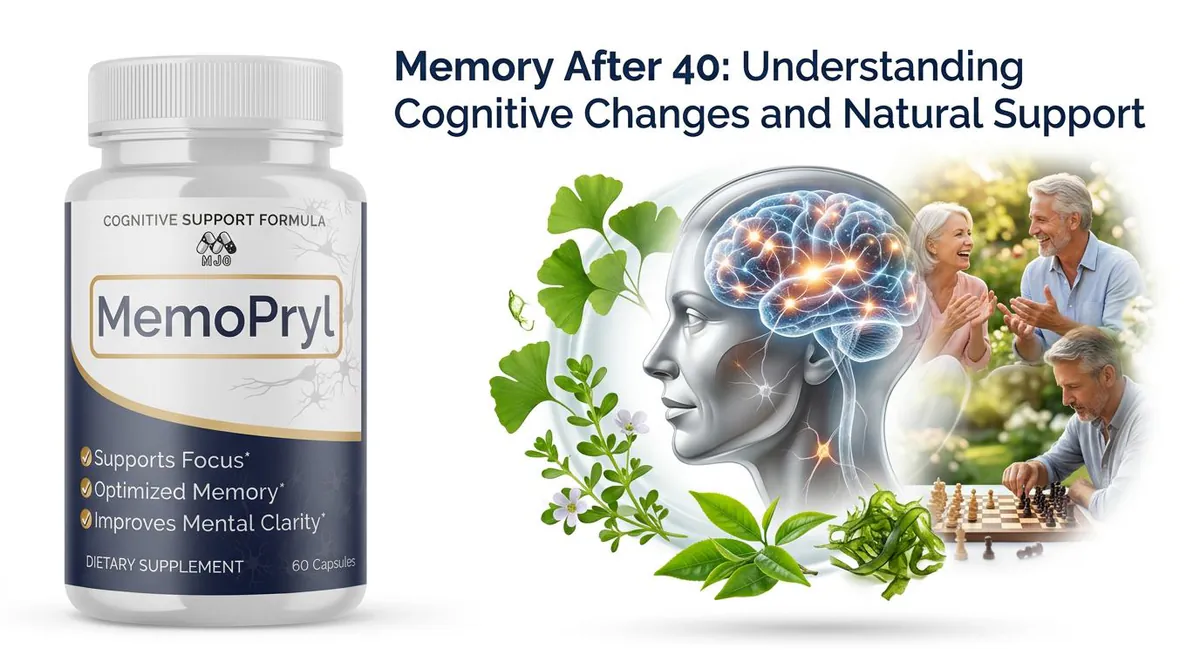
Several ingredients have been studied for their support of cognitive function in healthy adults — and they happen to be the foundation of MemoPryl:
- Bacopa Monnieri — studied for memory consolidation
- Lion's Mane Mushroom — studied for nerve cell support
- Ginkgo Biloba — studied for cerebral circulation
- Phosphatidylserine — a building block of brain cell membranes
- Omega-3 DHA — a structural fatty acid in brain tissue
- Rhodiola Rosea — studied for mental fatigue support
MemoPryl: Brain Support Designed for Adults Over 40
Nine research-inspired ingredients. Made in the USA. 60-day money-back guarantee.
Check Availability & Pricing →What Many People Find Encouraging
Memory after 40 isn't a downhill slide. It's a shift — and the cognitive abilities most people care about most (wisdom, judgment, the ability to put experiences in context) often get better. With consistent lifestyle care and thoughtful nutritional support, many people maintain remarkable cognitive sharpness into their 60s, 70s, and beyond.
The Bottom Line
The forgetfulness you notice after 40 is usually a sign that your brain wants more from you — better sleep, better food, more movement, more engagement, better stress management — not a sign that something is wrong. Build the lifestyle foundations. Add thoughtful support like MemoPryl. Give it consistent time. Most people find that's exactly what their midlife brain needed.